Filed under Bridal Style & Beauty
Wedding Gowns for Petite Brides: Shape, Waist Placement and Fabric
Overview
Five dress details petite brides can lean on—from continuous vertical lines to airy fabrics—with named examples for balance and comfort.
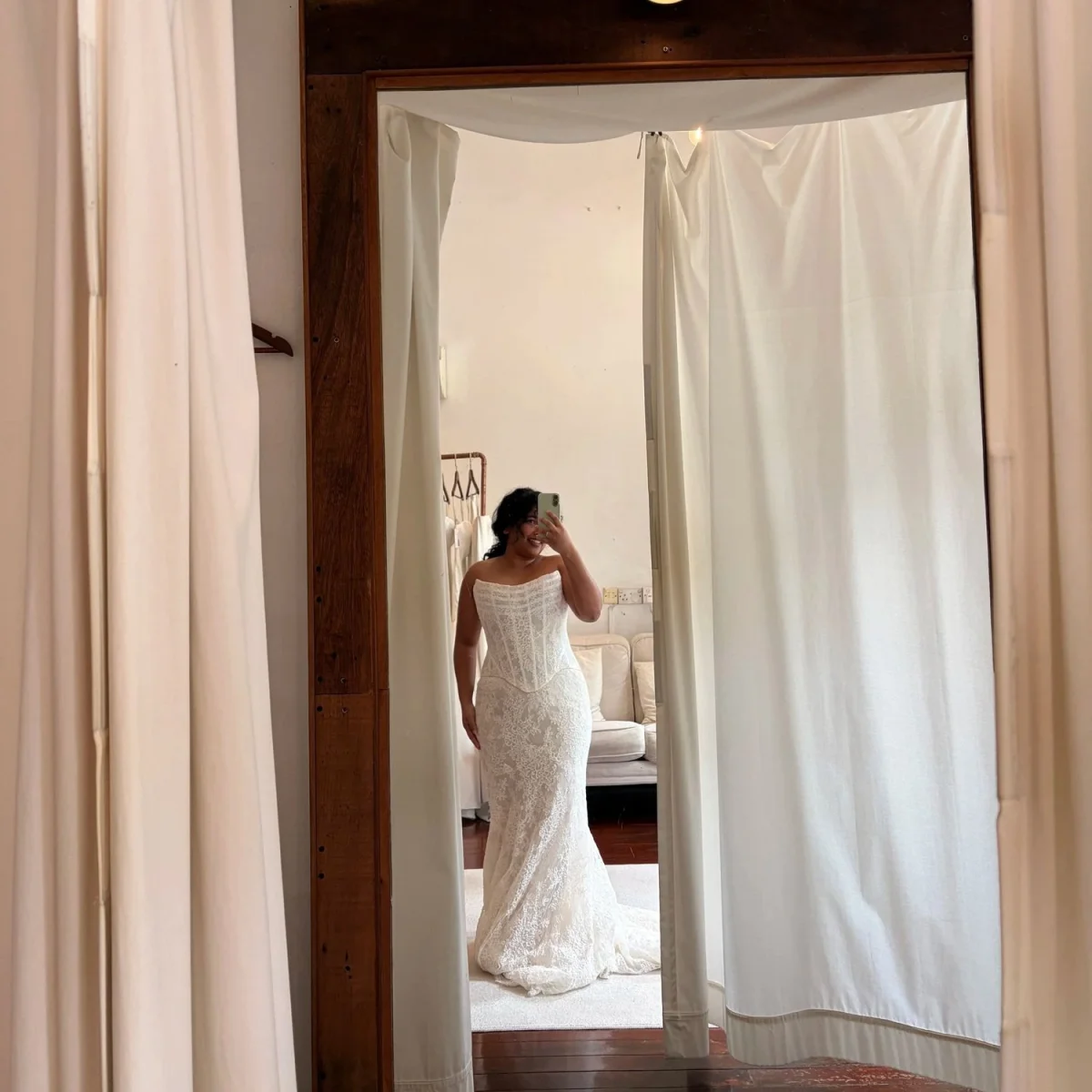
When you are petite, proportion and ease of movement can matter as much as the outline of the dress. Long vertical sweeps and lighter cloth can help a gown sit harmoniously on a smaller stature, while a raised waist can visually lengthen the legs. Those choices also free you to pick shoes you can actually wear instead of depending on extreme heel height.
At Frieda Brides in Singapore, the notes below apply whether you rent or buy. Treat them as prompts during try-ons: the goal is a shape that feels like yours and lets you move through the day, not a formula for what petite brides must wear.
Look first at the dress’s continuous line
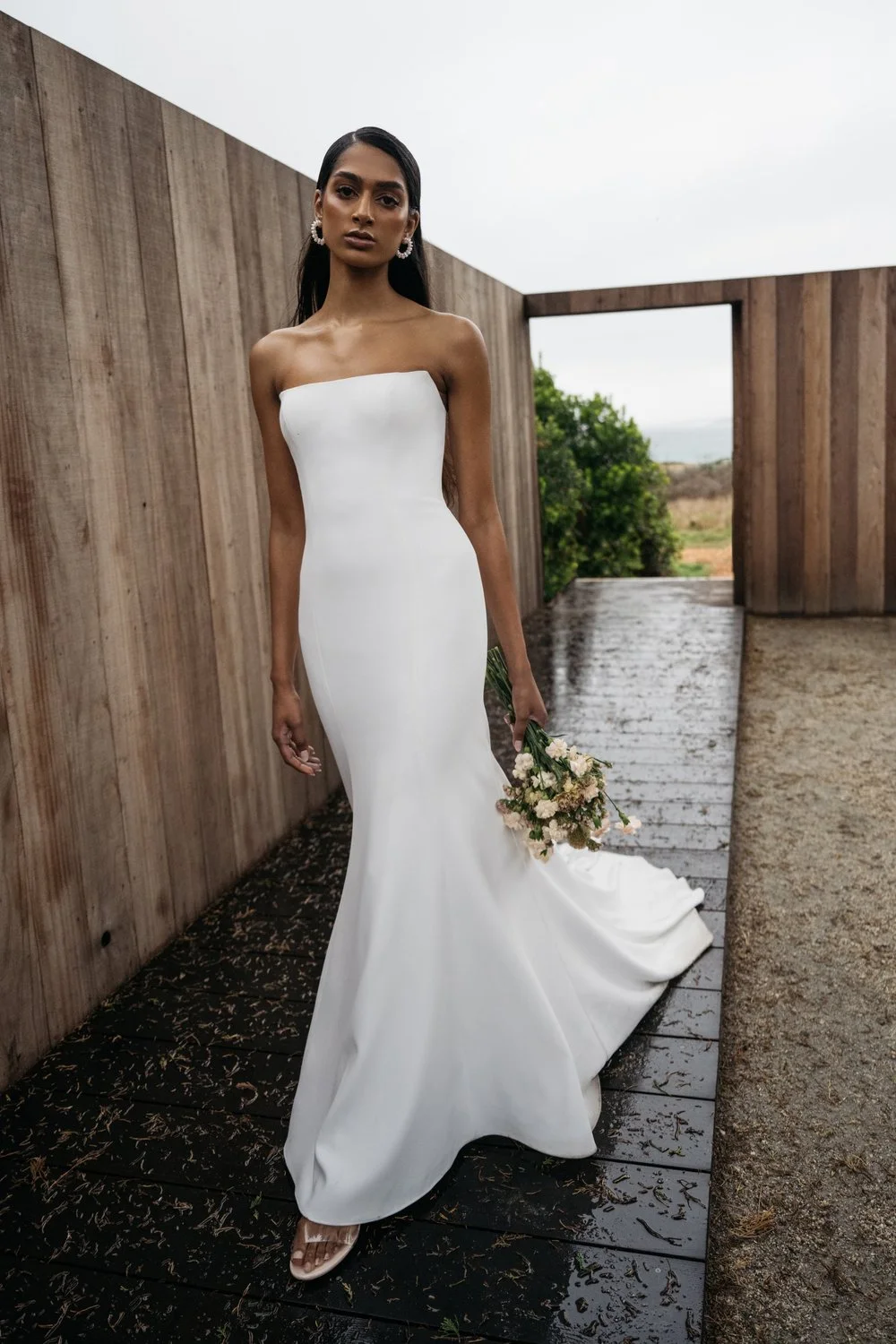
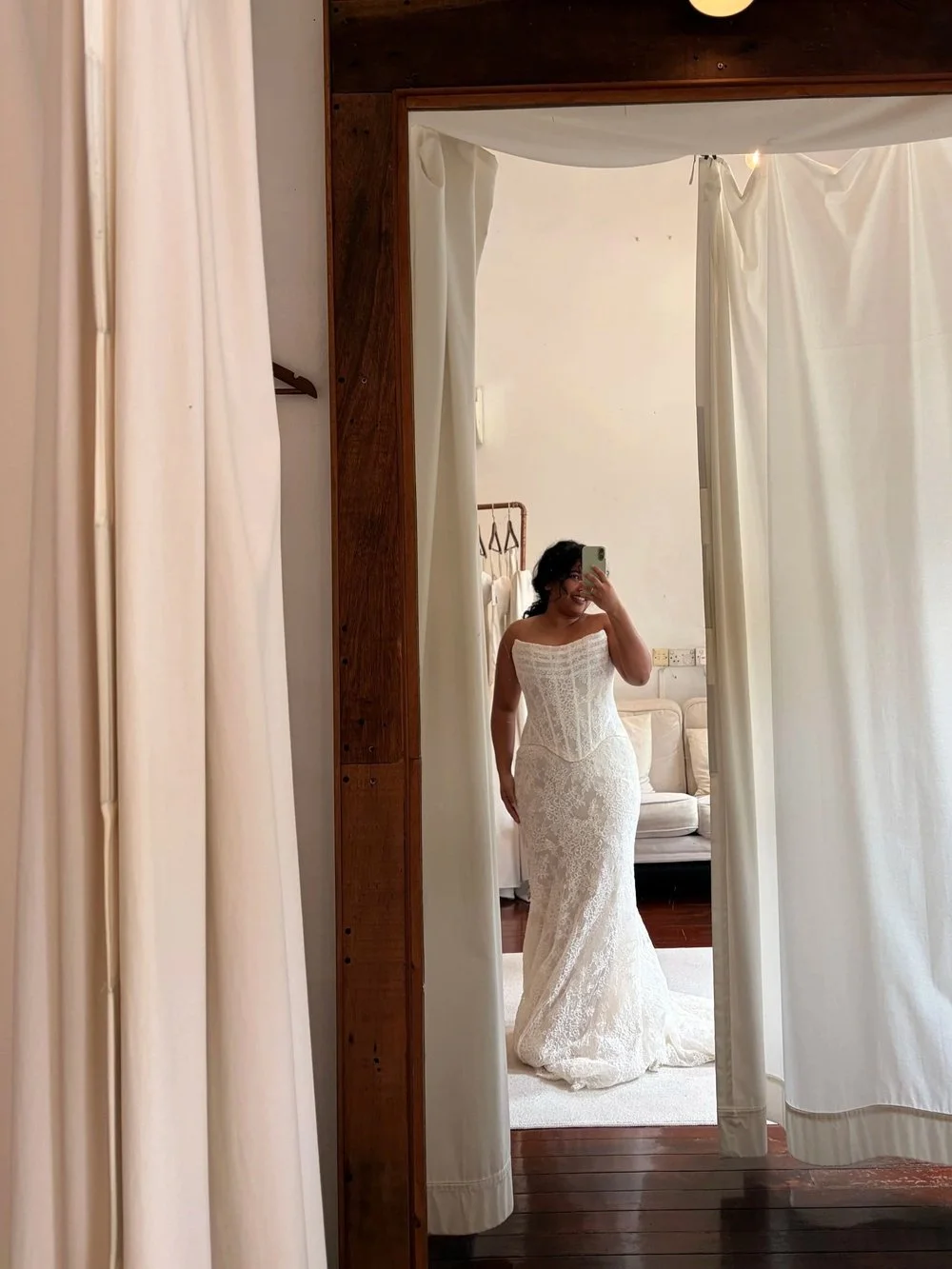
Skipping a obvious waist seam can run one smooth line from bodice to hem. Column, sheath and gentle fit-and-flare cuts often do that, which may elongate the figure. Tricia is one style the boutique cites for its uncluttered shape. In a similar gown, notice whether the skirt hangs cleanly and whether sitting and walking stay comfortable.
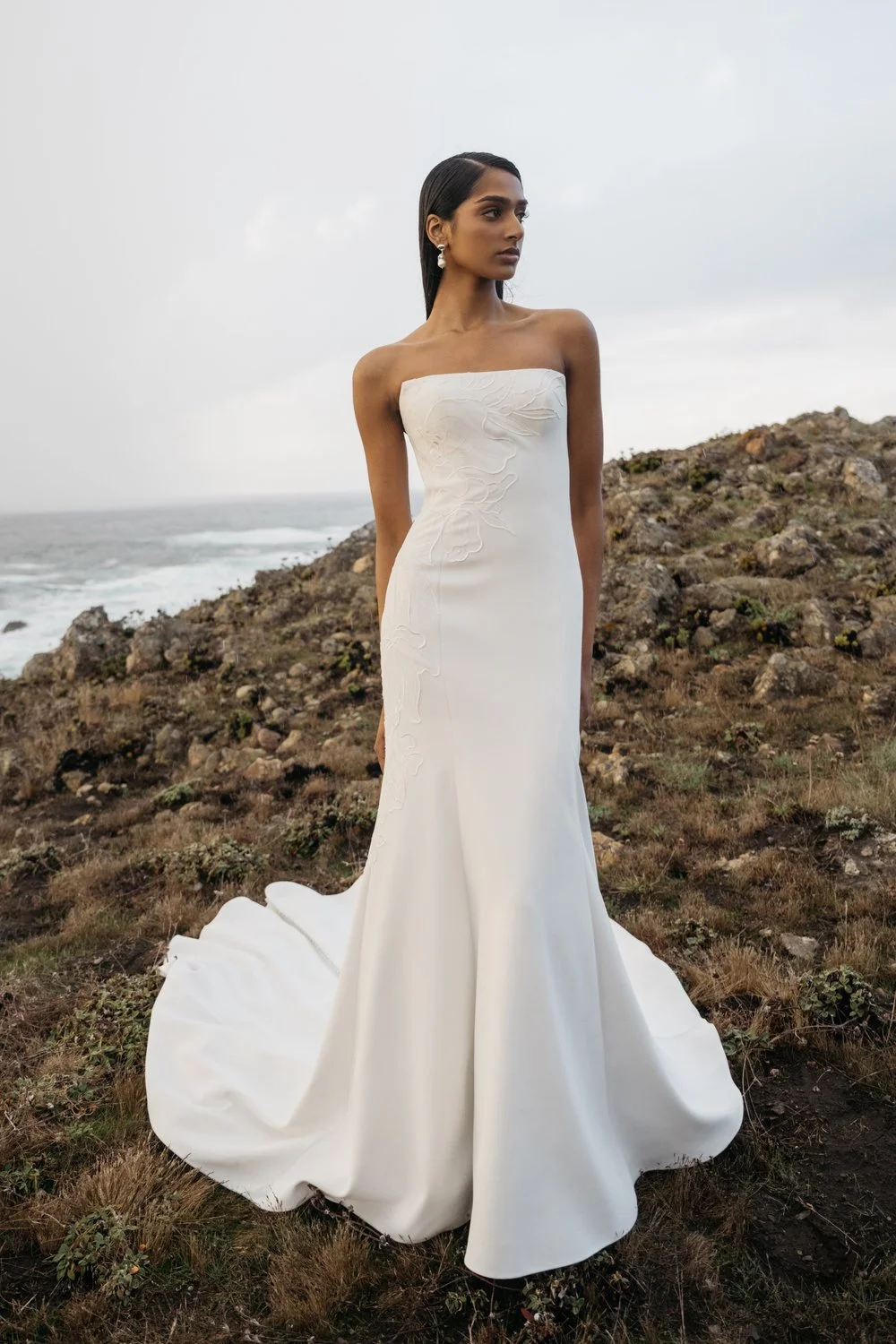
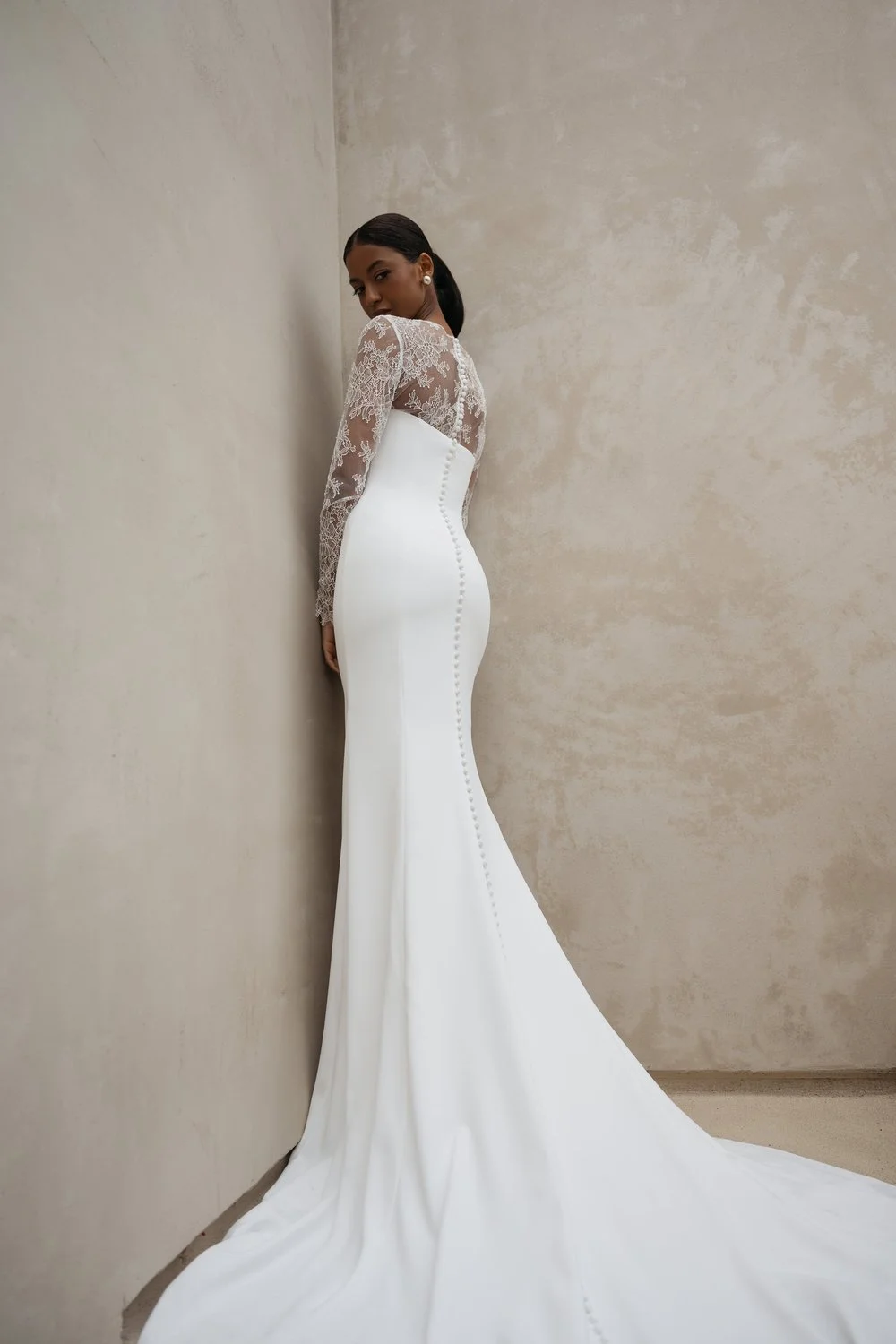
Experiment with a higher waistline
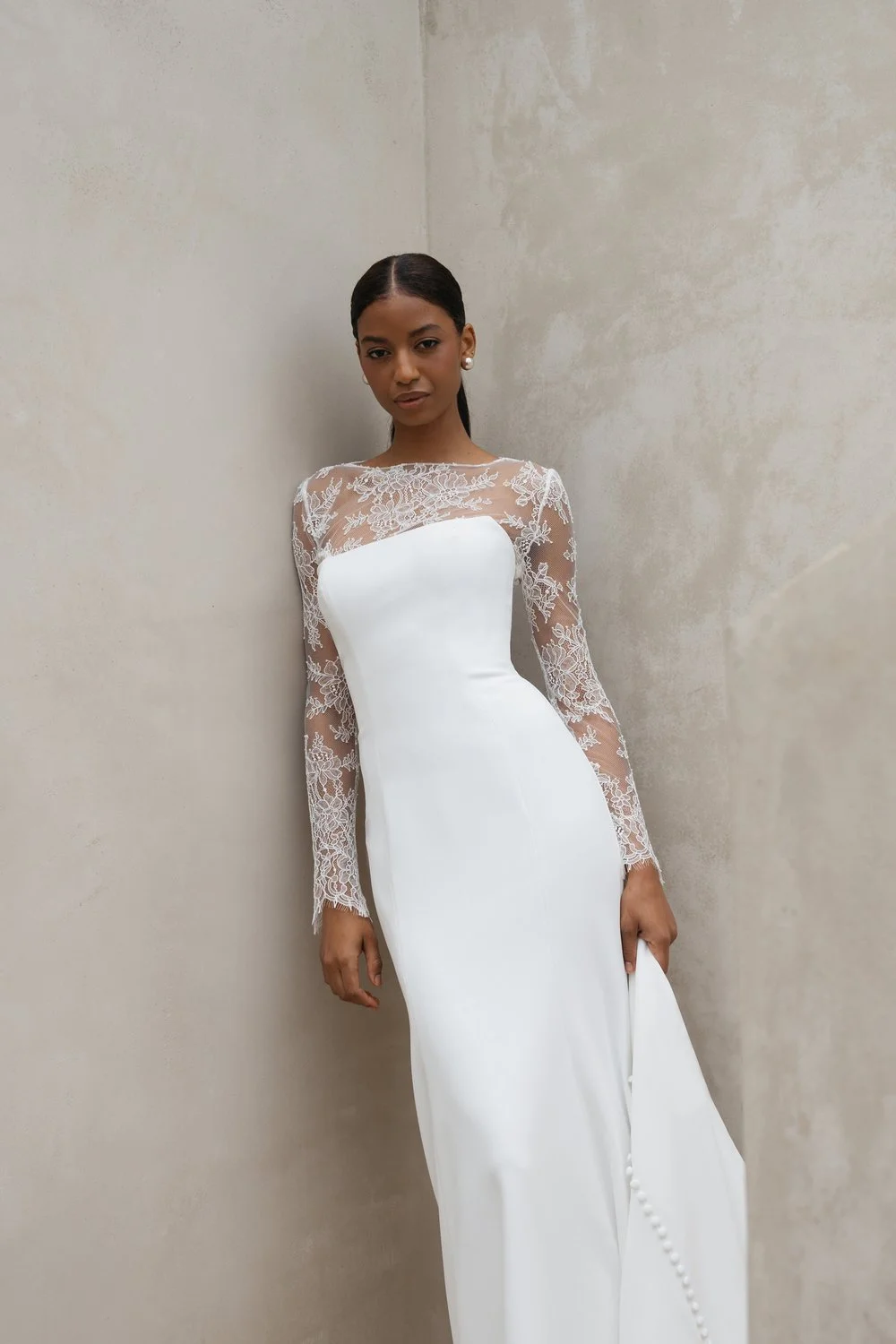
An empire line sits just under the bust, pulling where the skirt begins upward so legs read longer. The boutique also highlights how lightly this skirt moves—a practical win in Singapore’s climate. Alyne and Romina are styles to test. Note where each waist hits on your body and whether the skirt swings freely when you pace a few steps.
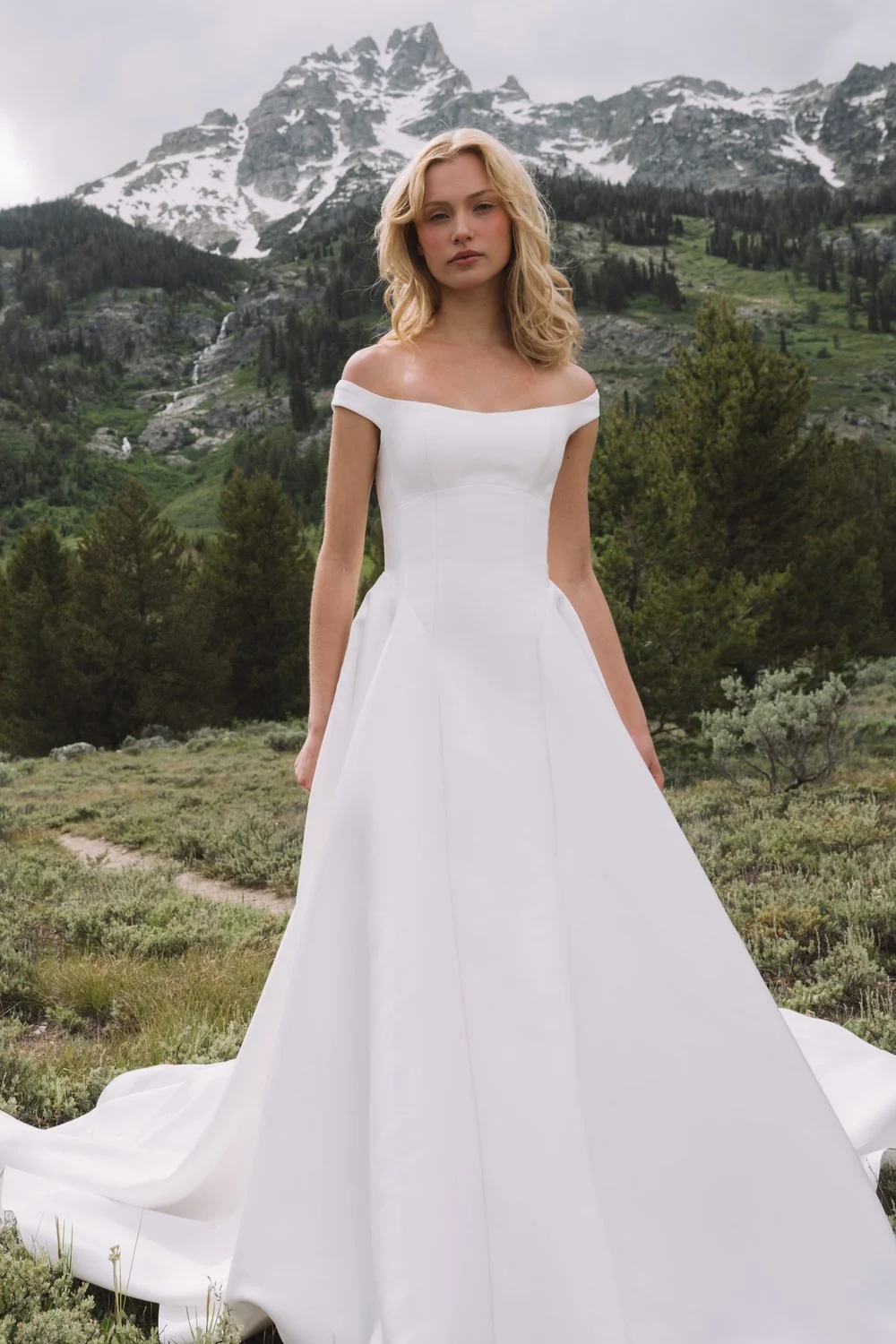
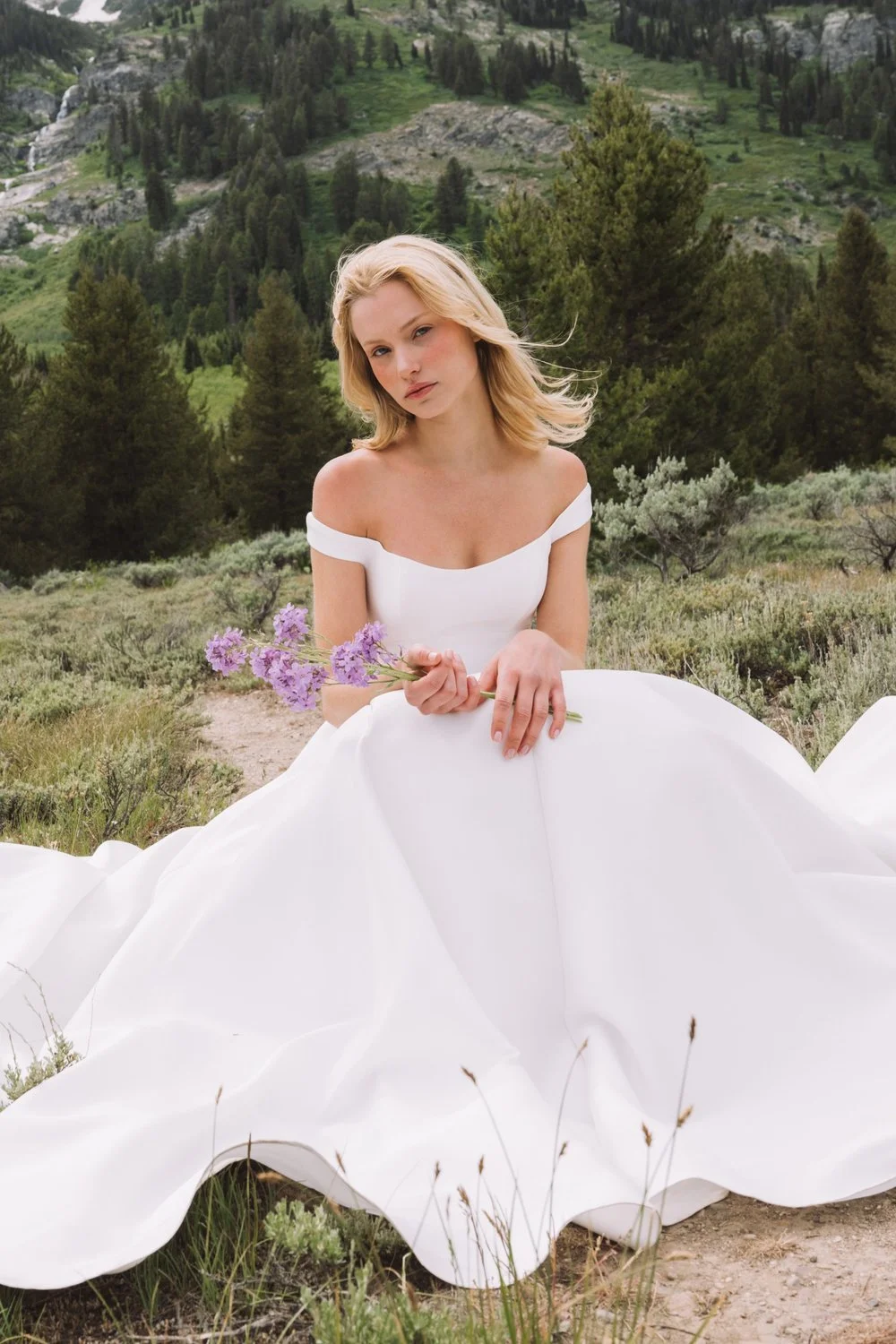
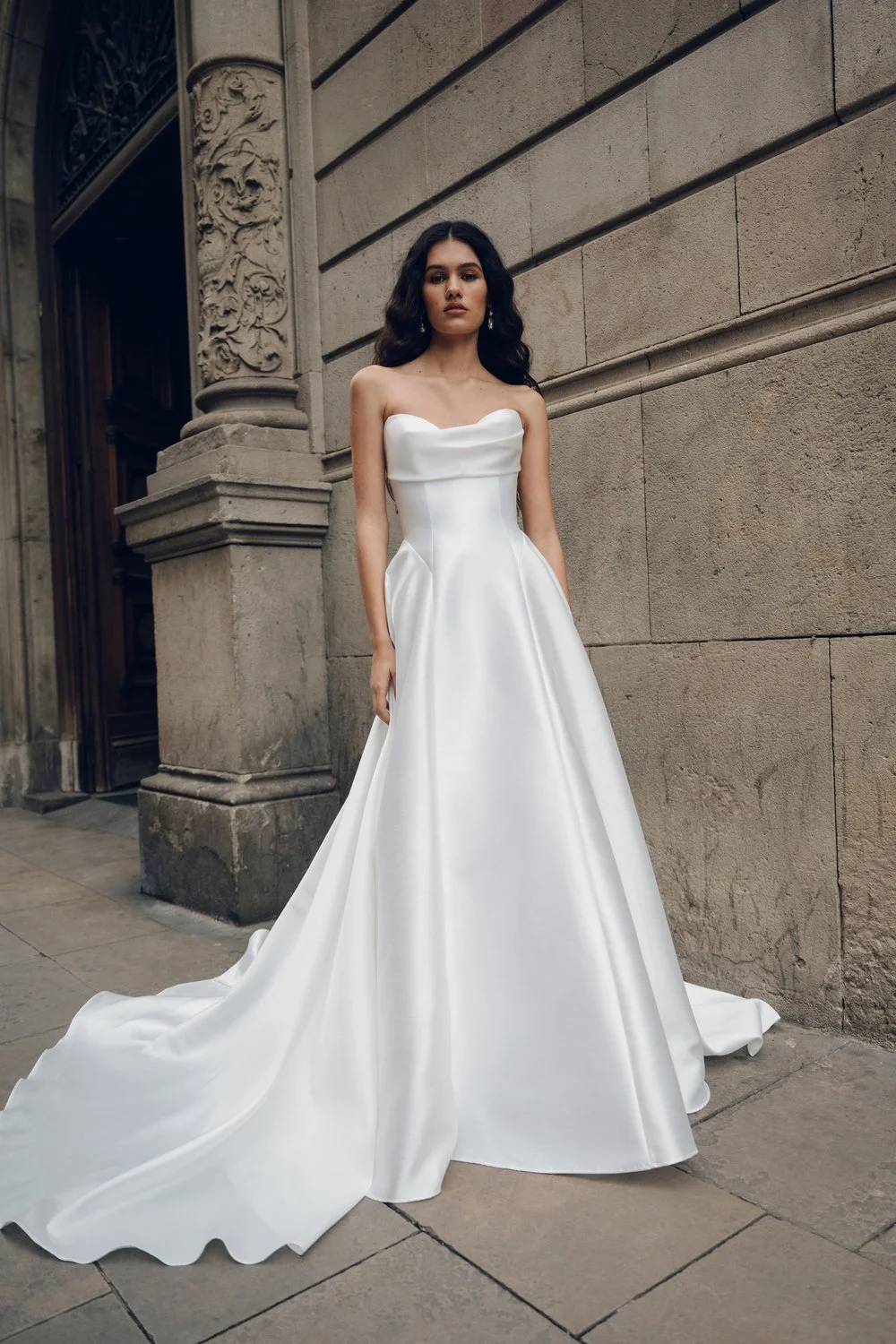
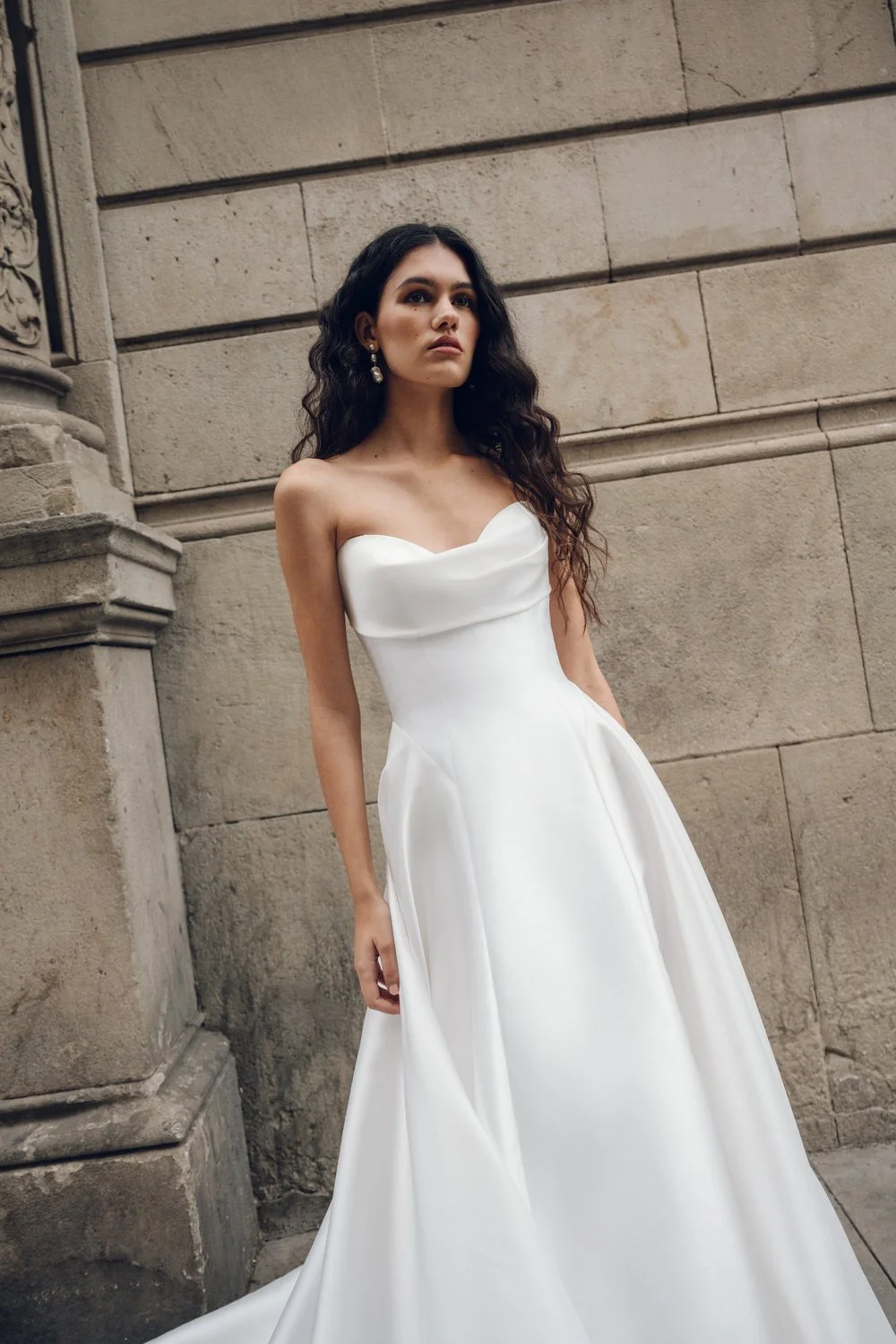
Let seams and pleats pull the eye upward
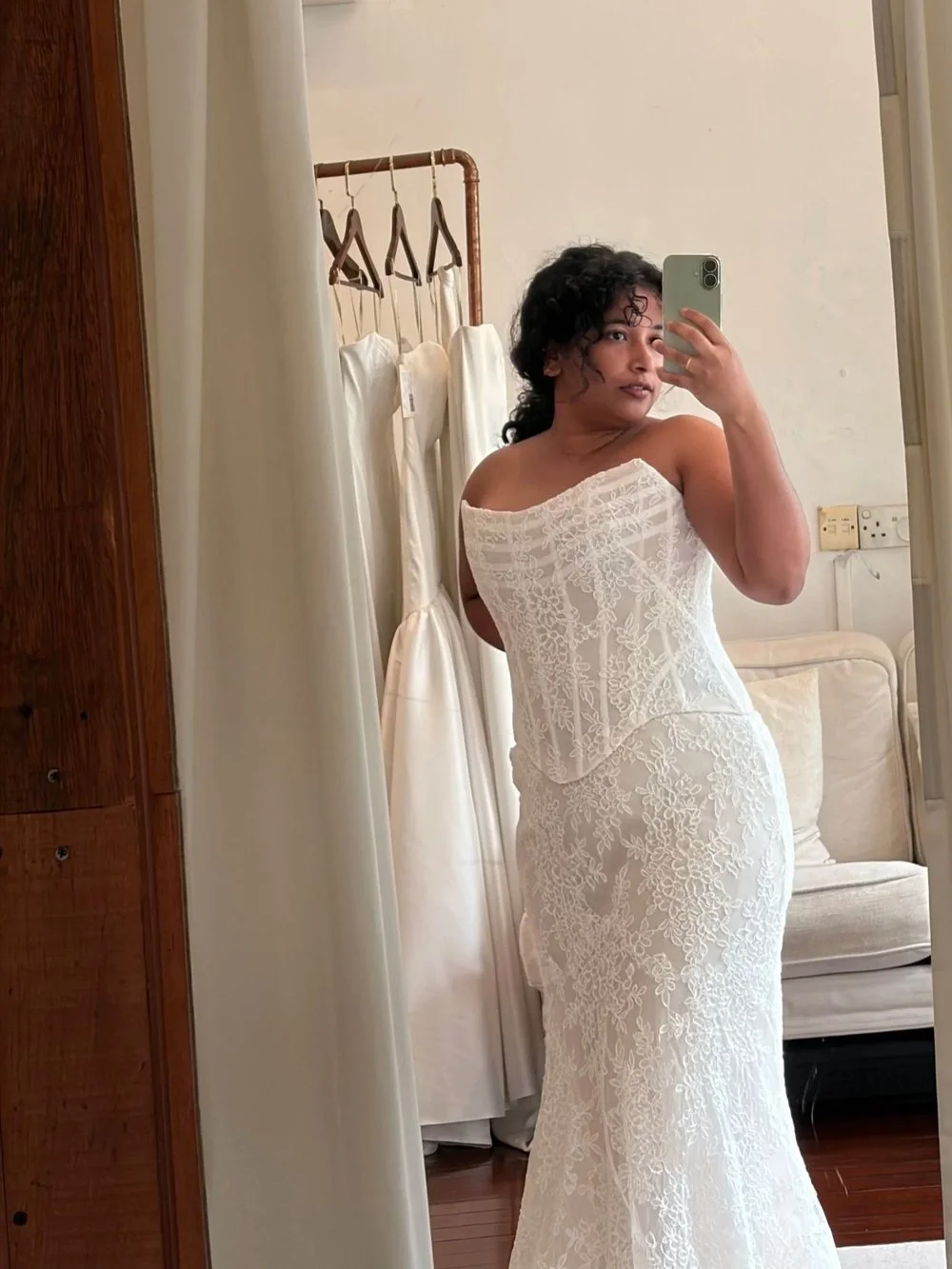
Vertical accents give the gaze a path from neckline to floor. Long seamlines, panels, corset boning and pleats can add that direction without cluttering the look. Antonia is known for its upright lines; Ida carries vertical detail on the corset. The source notes the model in Ida is 148cm and photographed flat on the floor—a helpful cue when judging scale on a petite height.
With a strongly seamed dress, study the silhouette from multiple angles. The feature should be something you love as design, not a trick you tolerate only for length.
Favour lighter materials for movement
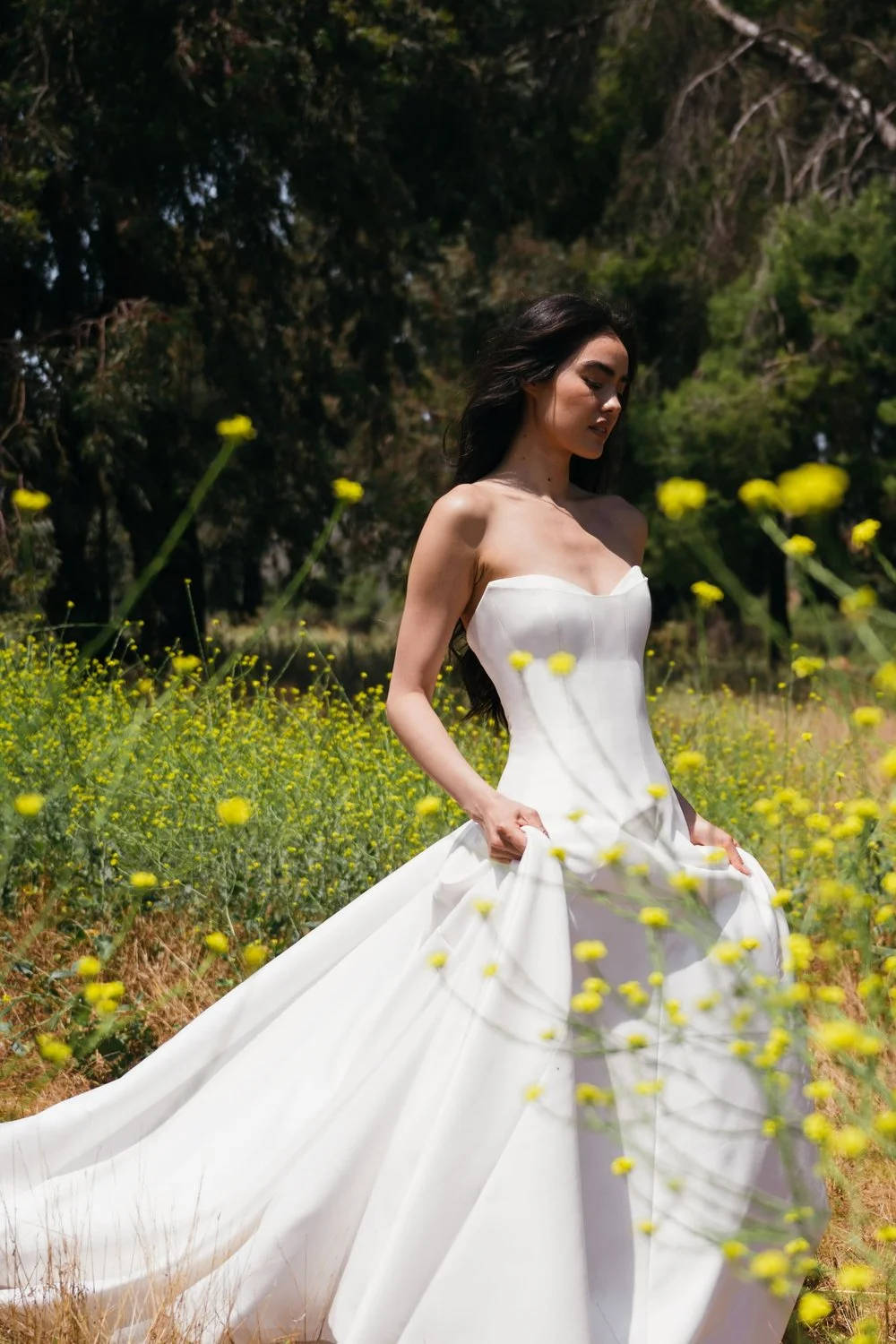
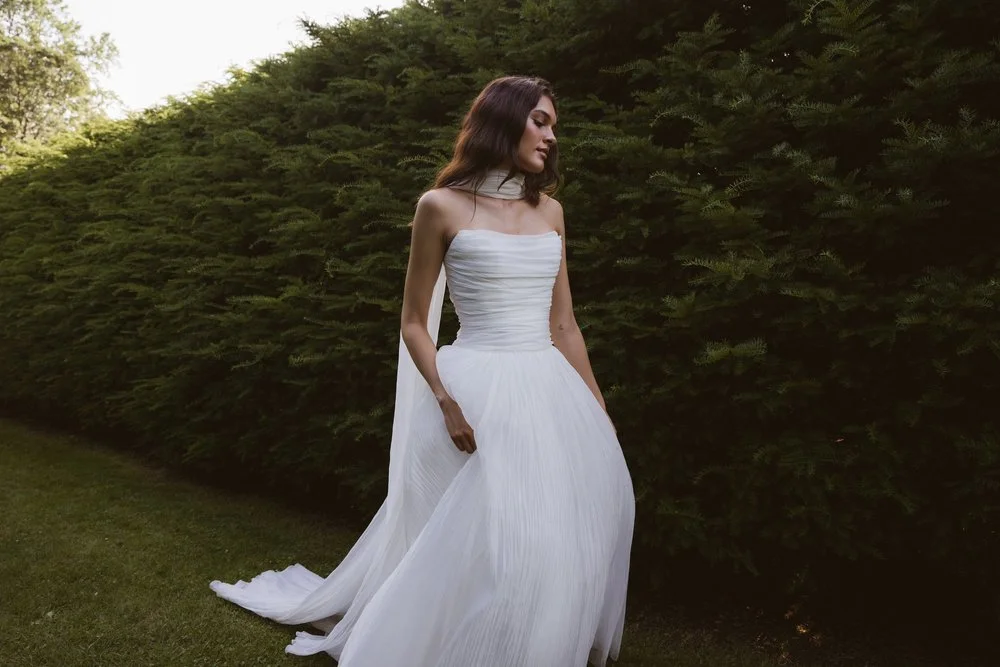
Weight changes drape and comfort. Dense fabric can visually bulk a petite frame, whereas chiffon, soft tulle, soft crepe and light linen usually move freely and keep edges crisp. The boutique recommends these for Singapore celebrations too. Romy, Penelope and Miriam are examples; Adeline pairs a lightweight linen skirt.
While comparing gowns, turn, sit and walk in each. A dress that looks featherlight on a hanger can behave differently once you are in motion—and all-day comfort is part of the right pick.
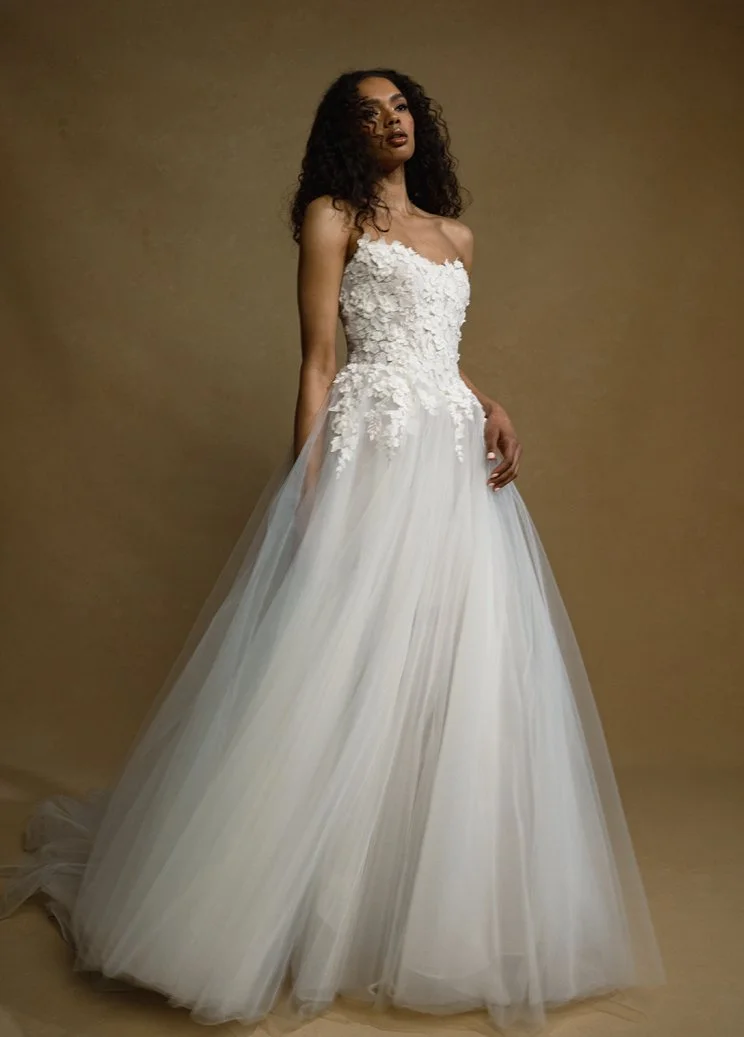
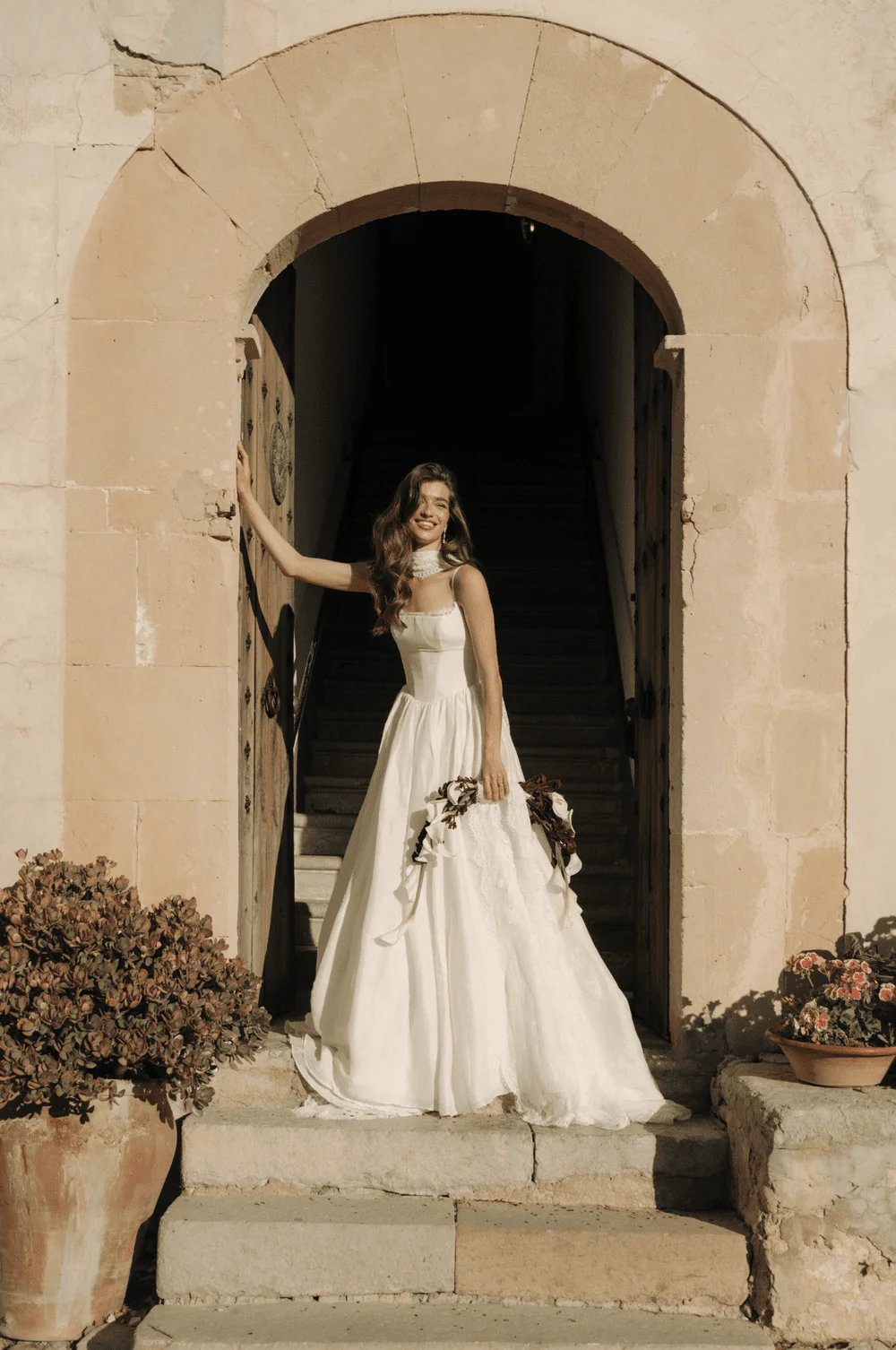
Ballgowns with a gentler skirt volume
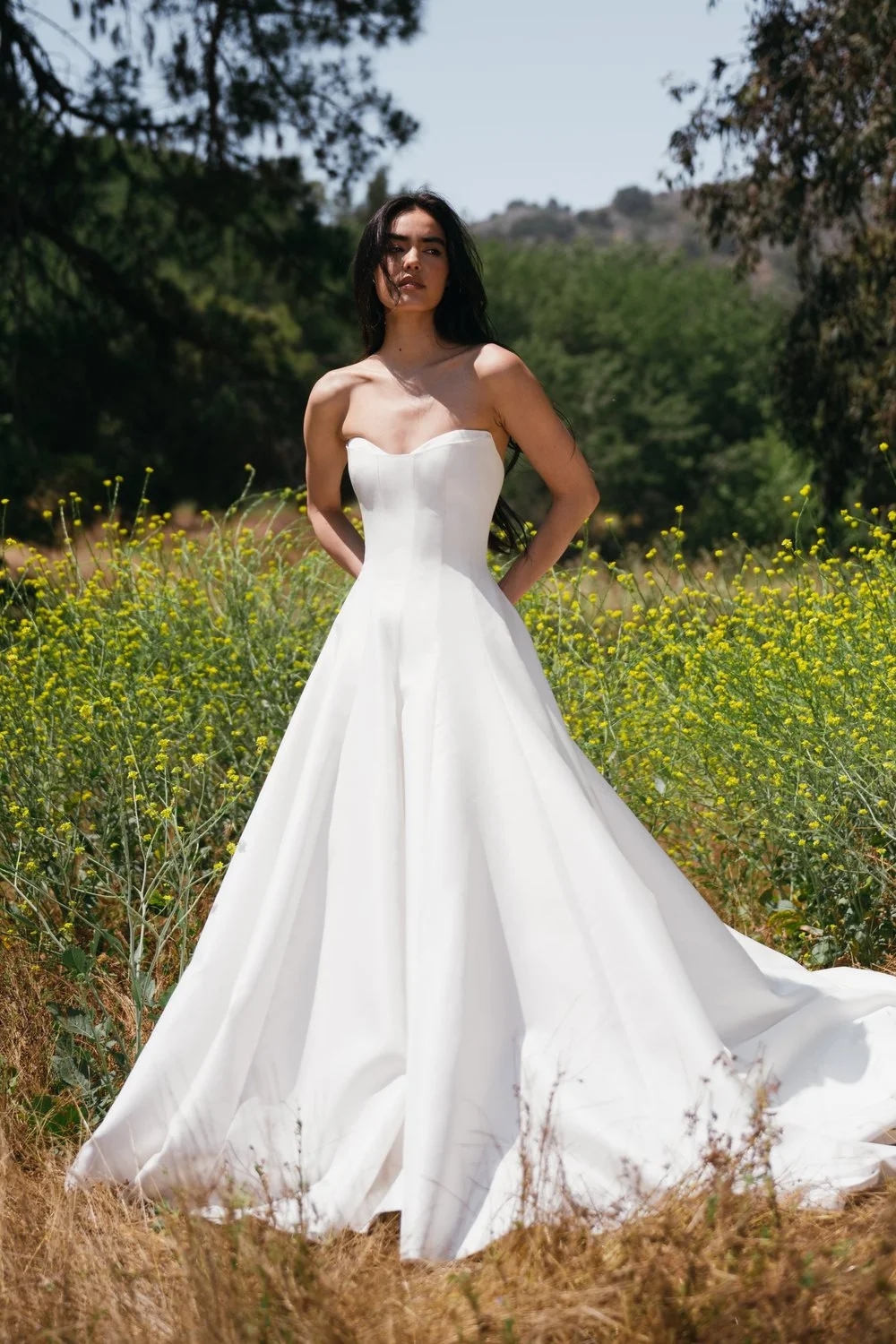
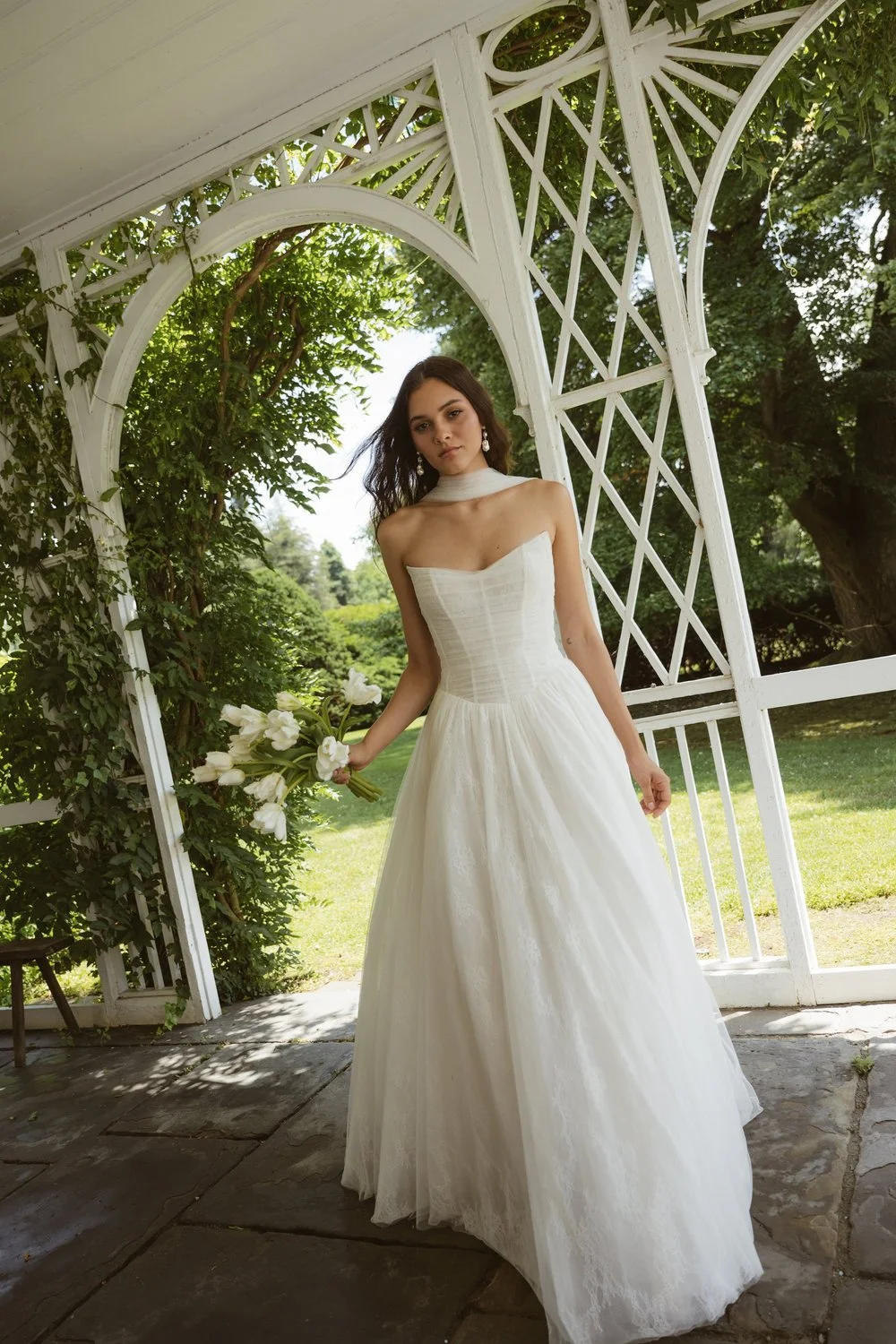
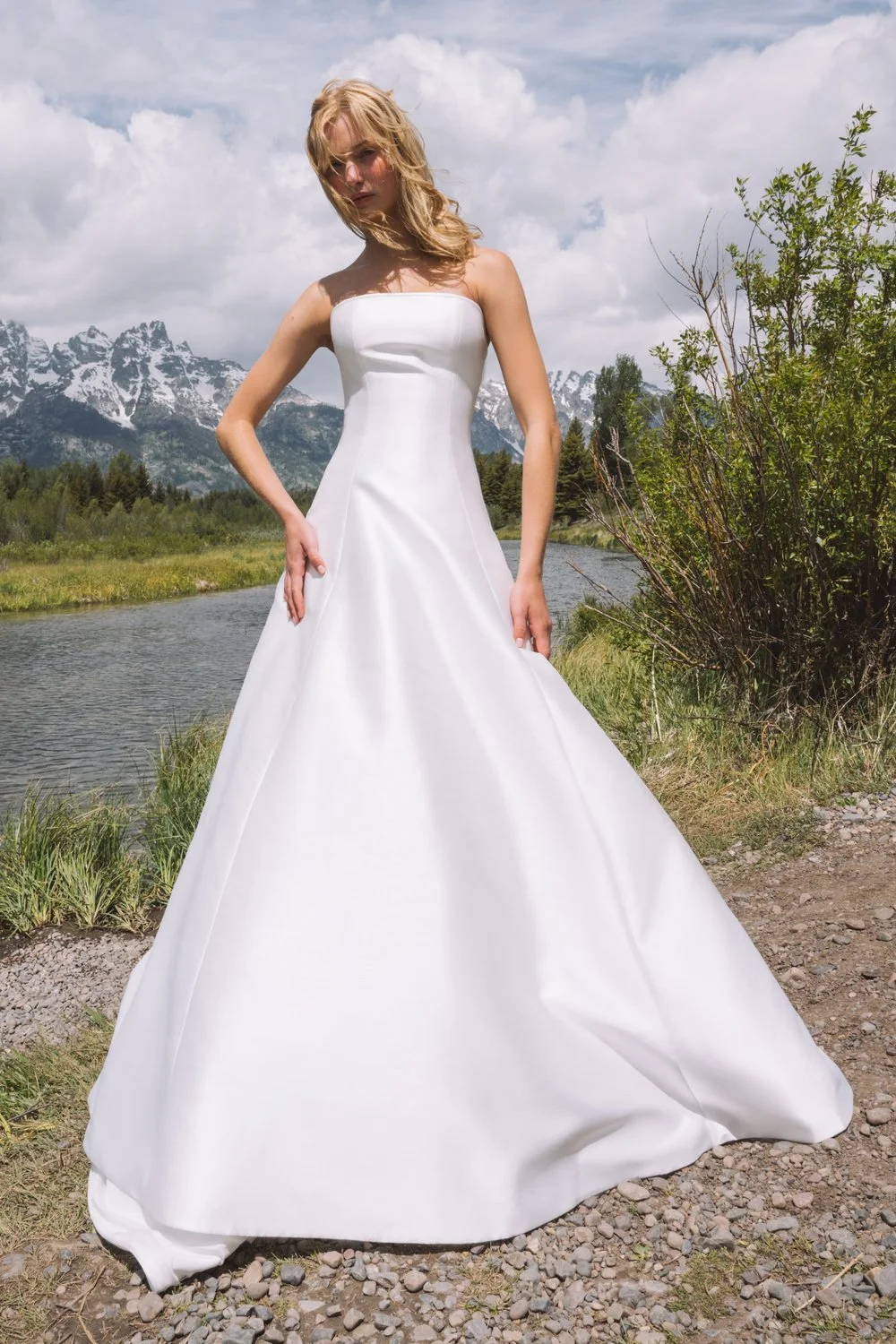
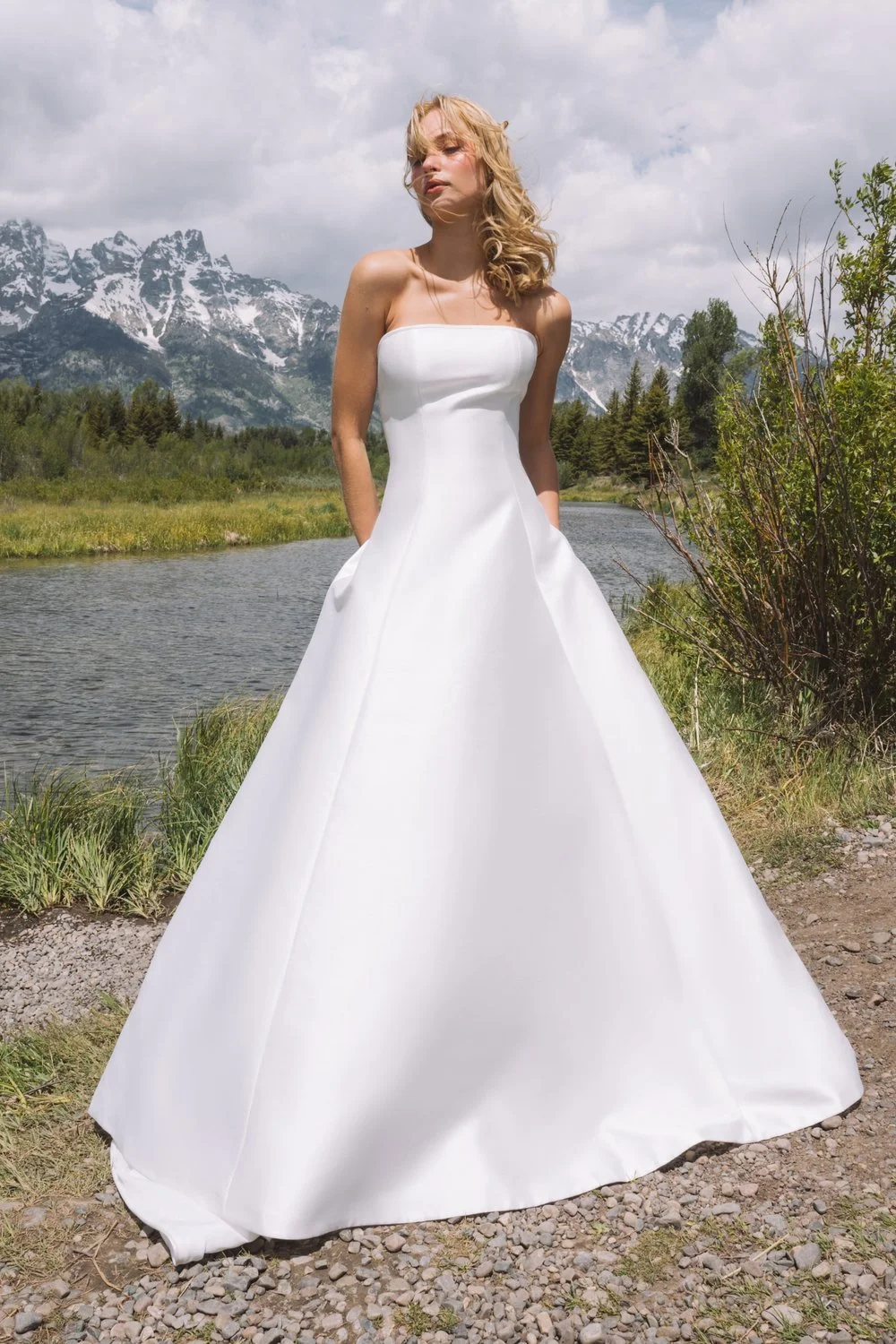
Petite frames need not skip ballgowns entirely. The guidance here is a softer bell, with the skirt leaving the bodice in a gradual flare rather than a wide poof. An overly puffed skirt can dominate the figure; a straightforward A-line can trace a smoother line waist to hem. Brody and Devon illustrate that softer route.
At the fitting, compare how wide the skirt feels and how it moves around you. The sweet spot is personal—it depends on taste and how you want to navigate the day—so sample different volumes before you decide.
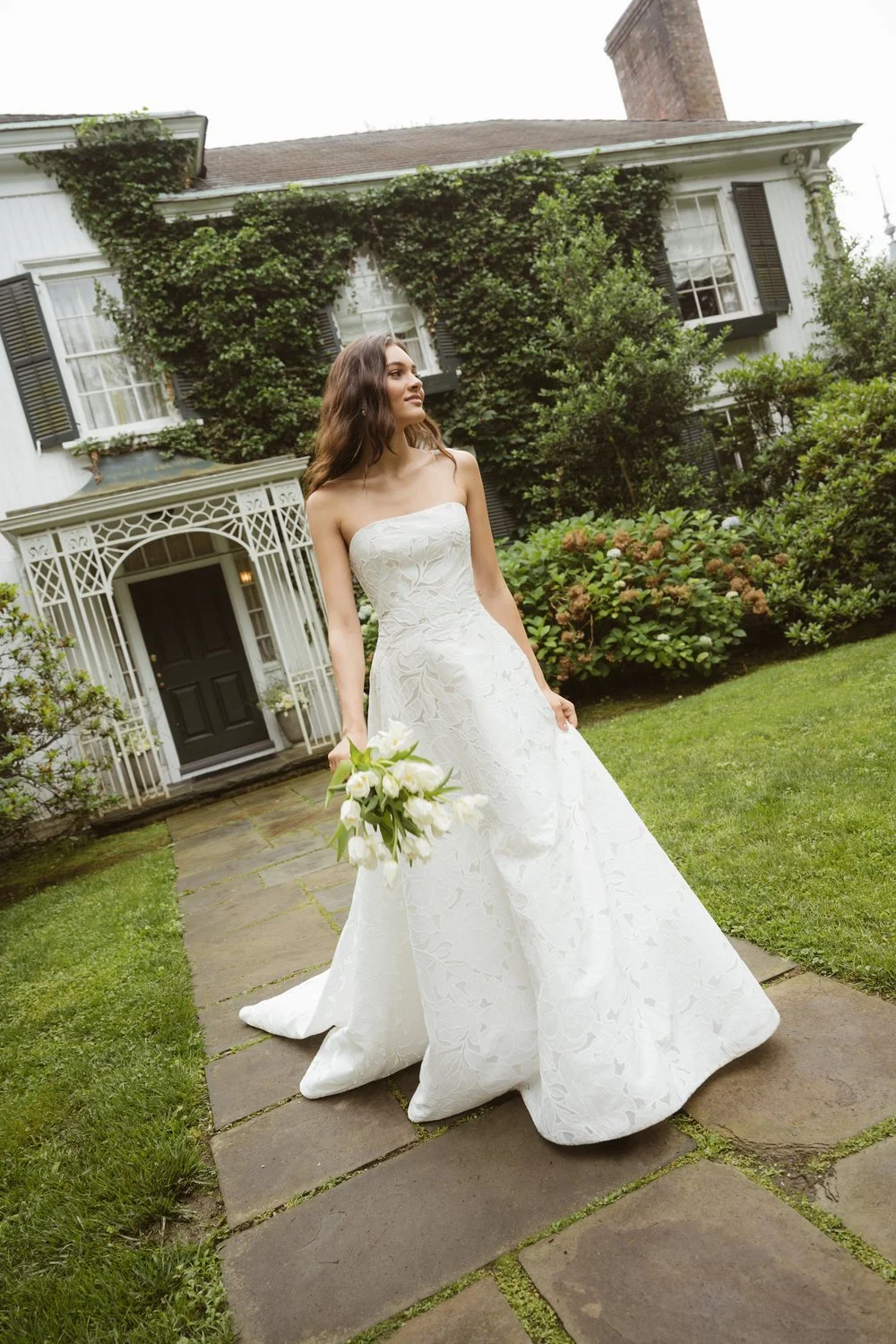
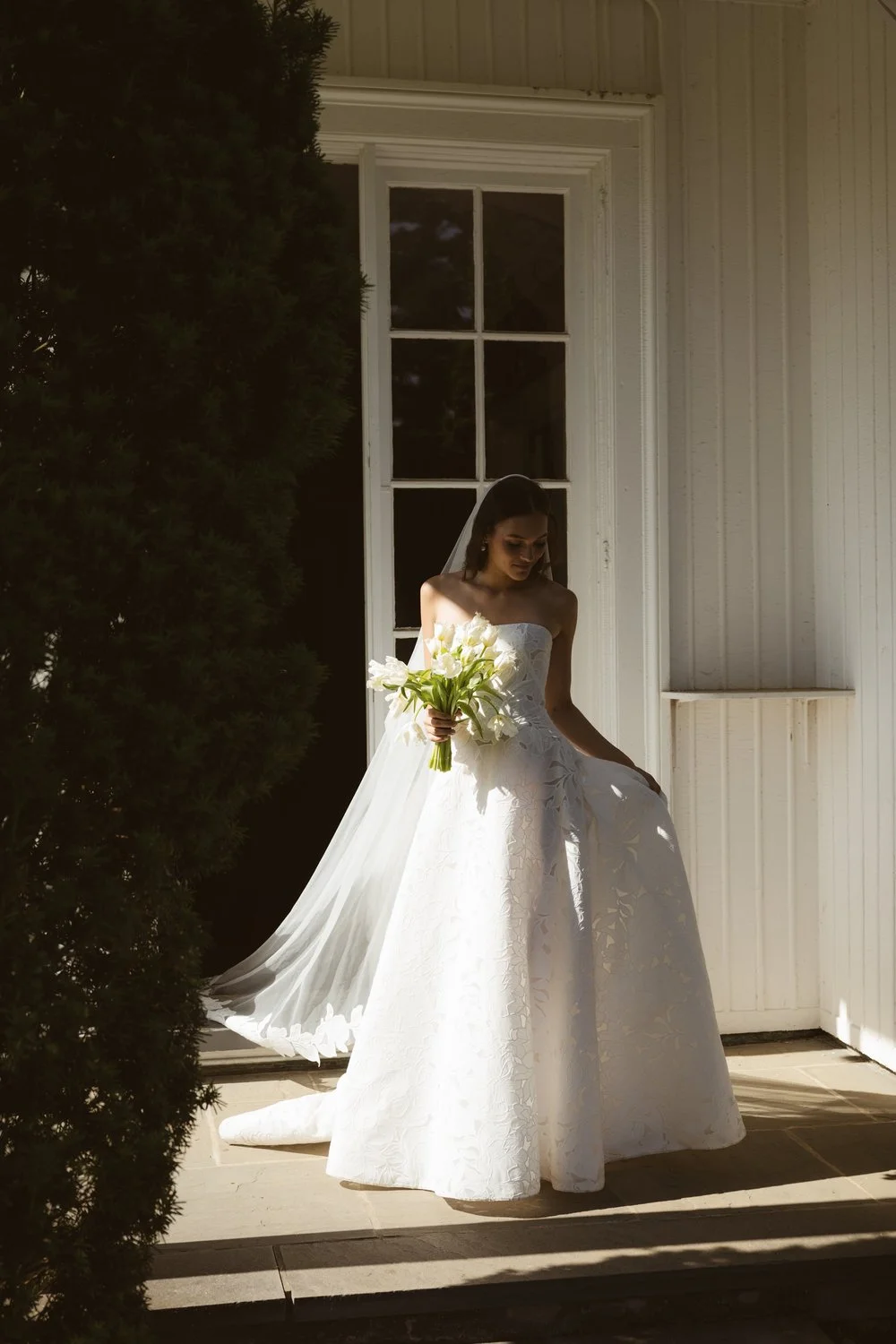
Let the fitting follow your taste
These prompts narrow the field, but no single shape fits every bride. Sample a few silhouettes and judge fit, gait and feel on your body. Frieda Brides describes its Singapore location as size-inclusive and stocks designer gowns to rent or buy. Appointments are available through its contact page.
Bring the elements you want to test—waist height, vertical seams, fabric hand, skirt fullness—and compare them on you. A gown that moves well and matches your style is the practical win for the full wedding day.
Book My Appointment